This guest blog post is written by Justine Aa. Rodian of Stibo Systems. The post is part 3 in a series of 3. Please find part 1 here and part 2 here.
 P
P
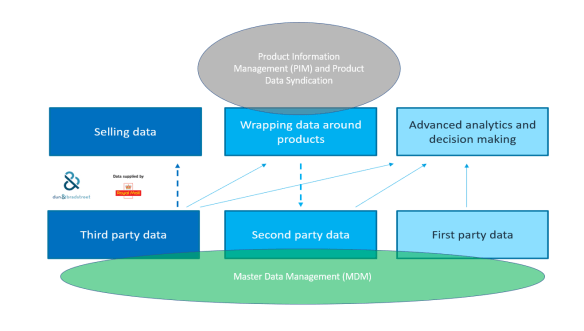
Party data. In relation to Master Data Management, party data is understood in two different ways. First of all, party data can mean data defined by its source. You will typically hear about first, second and third-party data. First-party data being your own data, second-party data being someone else’s first-party data handed over to you, while third-party data is collected by someone with no relation to you—and probably sold to you. However, when talking about party data management, party data refers to master data typically about individuals and organizations with relation to, for example, customer master data. A party can in this context be understood as an attorney or husband of a customer that plays a role in a customer transaction, and party data is then data referring to these parties. Party data management can be part of an MDM setup, and these relations can be organized using hierarchy management.
Learn more about party data here.
PII. Personally Identifiable Information. In Europe often just referred to as personal information. PII is sensitive information that identifies a person, directly (on its own) or indirectly (in combination). Examples of direct PII include name, address, phone number, email address and passport number, while examples of indirect PII include a combination (e.g., workplace and job title or maiden name in combination with date and place of birth).
Product Information Management (PIM). Today sometimes also referred to as Product MDM, Product Data Management (PDM) or Master Data Management for products. No matter the naming, PIM refers to a set of processes used to centrally manage and evaluate, identify, store, share and distribute product data or information about products. PIM is enabled with the implementation of PIM or Product Master Data Management software.
Learn more here.
Product Lifecycle Management (PLM). The process of managing the entire lifecycle of a product from ideation, through design, product development, sourcing and selling. The backbone of PLM is a business system that can efficiently handle the product information full-circle, and significantly increase time to market through streamlined processes and collaboration. That can be a standalone PLM tool or part of a comprehensive MDM platform.
Learn more here.
Pool. A data pool is a centralized repository of data where trading partners (e.g., retailers, distributors or suppliers) can obtain, maintain and exchange information about products in a standard format. Suppliers can, for instance, upload data to a data pool that cooperating retailers can then receive through their data pool.
Platform. A comprehensive technology used as a base upon which other applications, processes or technologies are developed. An example of a software platform is an MDM platform.
Profiling. Data profiling is a technique used to examine data from an existing information source, such as a database, to determine its accuracy and completeness and share those findings through statistics or informative summaries. Conducting a thorough data profiling assessment in the beginning of a Master Data Management implementation is recognized as a vital first step toward gaining control over organizational data as it helps identify and address potential data issues, enabling architects to design a better solution and reduce project risk.
Q
Quality. As in data quality, also sometimes just shortened into DQ. An undeniable part of any MDM vendor’s vocabulary as a high level of data quality is what a Master Data Management solution is constantly seeking to achieve and maintain. Data quality can be defined as a given data set’s ability to serve its intended purpose. In other words, if you have data quality, your data is capable of delivering the insight you require. Data quality is characterized by, for example, data accuracy, validity, reliability, completeness, granularity, consistency and availability.
R
Reference data. Data that define values relevant to cross-functional organizational transactions. Reference data management aims to effectively define data fields, such as units of measurements, fixed conversion rates and calendar structures, to “translate” these values into a common language in order to categorize data in a consistent way and secure data quality. Reference Data Management (RDM) systems can be the solution for some organizations, while others manage reference data as part of a comprehensive Master Data Management setup.
S
SaaS. Software as a Service. A software licensing and delivery model in which software is licensed on a subscription basis and is centrally hosted. SaaS is on the rise, due to change in consumer behavior and based on the higher demand for a more flat-rate pricing model, since these solutions are typically paid on a monthly or quarterly basis. SaaS is typically used in cloud MDM, for instance.
Supply Chain Management (SCM). The management of material and information flow in an organization—everything from product development, sourcing, production and logistics, as well as the information systems—to provide the highest degree of customer satisfaction, on time and at the lowest possible cost. A PLM solution or PLM MDM solution can be a critical factor for driving effective supply chain management.
Silos. When navigating the MDM landscape you will often come across the term data silos. A term describing when crucial data or information, such as master data, is held separately whether by individuals, departments, regions or systems. MDMs’ finest purpose is to “break down data silos.”
Stock Keeping Unit (SKU). A SKU represents an individual item, product or service manifested in a code, uniquely identifying that item, product or service. SKU codes are used in business to track inventory. It’s often a machine-readable bar code, providing an additional layer of uniqueness and identification.
Stack. The collection of software or technology that forms an organization’s operational infrastructure. The term stack is used in reference to software (software stack), technology (technology stack) or simply solution (solution stack) and refers to the underlying systems that make your business run smoothly. For instance, an MDM solution can—in combination with other solutions—be a crucial part of your software stack.
Stewardship. Data stewardship is the management and oversight of an organization’s data assets to help provide business users with high-quality data that is easily accessible in a consistent manner. Data stewards will often be the ones in an organization responsible for the day-to-day data governance.
Strategy. As with all major business initiatives, MDM needs a thorough, coherent, well-communicated business strategy in order to be as successful as possible.
Supplier data. Data about suppliers. One of the domains on which MDM can be beneficial. May be included in an MDM setup in combination with other domains, such as product data.
Learn more about supplier data here.
Synchronization. The operation or activity of two or more things at the same time or rate. Applied to data management, data synchronization is the process of establishing data consistency from one endpoint to another and continuously harmonizing the data over time. MDM can be the key enabler for global or local data synchronization.
Syndication. Data syndication is basically the onboarding of data provided from external sources, such as suppliers. An MDM solution will typically automate the process of receiving external data while making sure that high-quality criteria are met.
Swamp. A data swamp is a deteriorated data lake, that is inaccessible to its intended users and provides little value.
T
Training. No, not the type that goes on in a gym. Employee training, that is. MDM is not just about software. It’s about the people using the software, hence they need to know how to use it best in order to maximize the Return on Investment (ROI). MDM users will have to receive training from either the MDM vendor, consultants or from your employees who already have experience with the solution.
U
User Interface (UI). The part of the machine that handles the human–machine interaction. In an MDM solution—and in all other software solutions—users have an “entrance,” an interface from where they are interacting with and operating the solution. As is the case for all UIs, the UI in an MDM solution needs to be user-friendly and intuitive.
V
Vendor. There are many Master Data Management vendors on the market. How do you choose the right one? It all depends on your business needs, as each vendor is often specialized in some areas of MDM more than others. However, there are some things you generally should be aware of, such as scalability (Is the system expandable in order to grow with your business?), proven success (Does the vendor have solid references confirming the business value?) and integration (Does the solution integrate with the systems you need it to?).
W
Warehouse. A data warehouse—or EDW (Enterprise Data Warehouse)—is a central repository for corporate information and data derived from operational systems and external data sources, used to generate analytics and insight. In contrast to the data lake, a data warehouse stores vast amounts of typically structured data that is predefined before entering the data warehouse. The data warehouse is not a replacement for Master Data Management, as MDM can support the EDW by feeding reliable, high-quality data into the system. Once the data leaves the warehouse, it is often used to fuel Business Intelligence.
Workflow automation. An essential functionality in an MDM solution is the ability to set up workflows, a series of automated actions for steps in a business process. Preconfigured workflows in an MDM solution generate tasks, which are presented to the relevant business users. For instance, a workflow automation is able to notify the data steward of data errors and guide him through fixing the problem.
Y
Yottabyte. Largest data storage unit (i.e., 1,000,000,000,000,000,000,000,000 bytes). No Master Data Management solution, or any other data storage solution, can handle this amount yet. But, scalability should be a considerable factor for which MDM solution you choose.
Z
ZZZZZ… With a Master Data Management solution placed at the heart of your organization you get to sleep well at night, knowing your data processes are supported and your information can be trusted.
If you’d like the whole A-Z e-book in a downloadable format, please find it here.
Justine Aagaard Rodian is a marketing specialist at Stibo Systems with a background as a journalist. Five years in the data management industry has armed Justine with unique insights and she is now using her storytelling and digital skills to spread valuable business knowledge about Master Data Management and related topics.

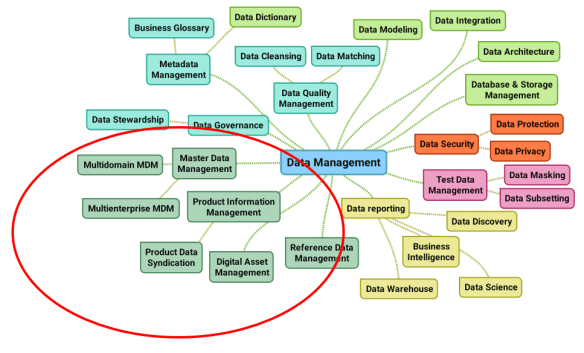
 In Multidomain MDM we work with a range of different entity types as party (with customer, supplier, employee and other roles), location, product and asset. The golden record concept applies to all of these entity types, but in slightly different ways.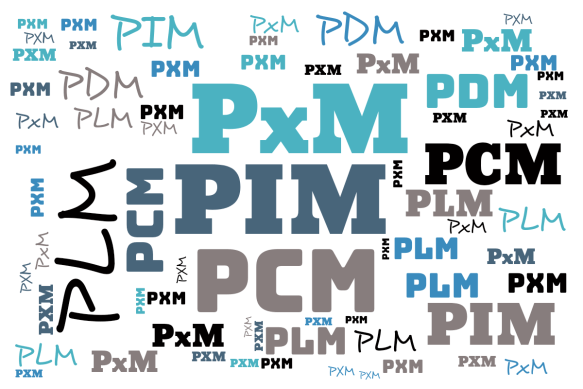
 The Disruptive MDM / PIM / DQM List