8 Forms of Master Data Management

8 forms MDM

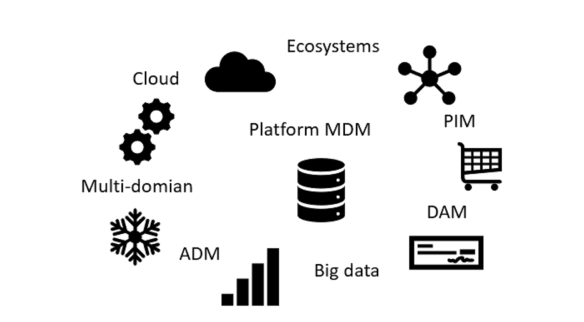
Master Data Management (MDM) can take many forms. In the following I will shortly introduce 8 forms of MDM. A given MDM implementation will typically be focused on one of these forms with some elements of the other forms and a given piece of technology will have an origin in one of these forms and in more or less degree encompass some more forms:

1.      The traditional MDM platform: A traditional MDM solution is a hub for master data aiming at delivering a single source of truth (or trust) for master data within a given organization either enterprise wide or within a portion of an enterprise. The first MDM solutions were aimed at Customer Data Integration (CDI), because having multiple and inconsistent data stores for customer data with varying data quality is a well-known pain point almost everywhere. Besides that, similar pain points exist around vendor data and other party roles, product data, assets, locations and other master data domains and dedicated solutions for that are available.

2.      Product Information Management (PIM): Special breed of solutions for Product Information Management aimed at having consistent product specifications across the enterprise to be published in multiple sales channels have been around for years and we have seen a continuously integration of the market for such solutions into the traditional MDM space as many of these solutions have morphed into being a kind of MDM solution.

3.      Digital Asset Management (DAM): Not at least in relation to PIM we have a distinct discipline around handling digital assets as text documents, audio files, video and other rich media data that are different from the structured and granular data we can manage in data models in common database technologies. A post on this blog examines How MDM, PIM and DAM Stick Together.

4.      Big Data Integration: The rise of big data is having a considerable influence on how MDM solutions will look like in the future. You may handle big data directly inside MDM og link to big data outside MDM as told in the post about The Intersection of MDM and Big Data.

5.      Application Data Management (ADM): Another area where you have to decide where master data stops and handling other data starts is when it comes to transactional data and other forms data handled in dedicated applications as ERP, CRM, PLM (Product Lifecycle Management) and plenty of other industry specific applications. This conundrum was touched in a recent post called MDM vs ADM.

6.      Multi-Domain MDM: Many MDM implementations focus on a single master data domain as customer, vendor or product or you see MDM programs that have a multi-domain vision, overall project management but quite separate tracks for each domain. We have though seen many technology vendors preparing for the multi-domain future.

7.      MDM in the cloud: MDM follows the source applications up into the cloud. New MDM solutions naturally come as a cloud solution. The traditional vendors introduce cloud alternatives to or based on their proven on-promise solutions. There is only one direction here: More and more cloud MDM – also as customer as business partner engagement will take place in the cloud.

8.      Ecosystem wide MDM: Doing MDM enterprise wide is hard enough. But it does not stop there. Increasingly every organization will be an integrated part of a business ecosystem where collaboration with business partners will be a part of digitalization and thus we will have a need for working on the same foundation (doing Multienterprise MDM as Gartner coins it) as reported in the post Ecosystem Wide MDM.

PS: If you are a vendor on the MDM, PIM or DAM market you can promote your solution here on the list and emphasize on the forms you support. Registration can be done here.
3 Reasons MDM No Longer Delivers a Customer 360

Today’s guest blog post is from David Corrigan, CEO at AllSight

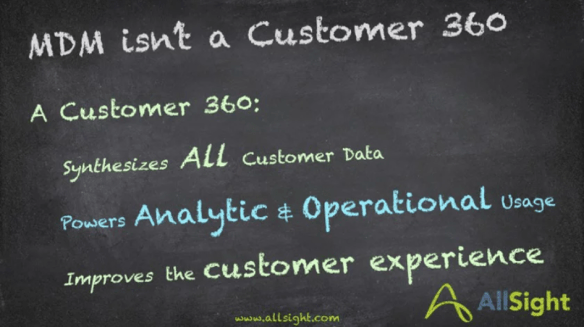
When Master Data Management (MDM) and Customer Data Integration (CDI) were designed over 15 years ago, they were touted as the answer to “Customer 360”.  But the art of mastering data and the art of creating a complete view of a customer are two very different things.  MDM is focused on managing a much smaller, core data set and aims to very deeply and truly master it.  Customer 360 solutions focus on “all data about the customer” to get the complete picture.  When it comes to a 360-degree view of the customer, master data is only part of the story.  Additional data has to be part of the 360 in order to have a full understanding of the customer – whether that be an individual or an organization. Additional data sources and data types required for today’s Customer 360 include transactions, interactions, events, unstructured content, analytics and intelligence – all of which are not managed in MDM.

Today, leading organizations are looking beyond MDM to a new era of Customer 360 technology to deliver the elusive complete view of the customer.  Here are 3 reasons why

  1. Customer 360 needs all data; MDM only stores partial data.  MDM focuses on core master data attributes, matching data elements and improving data quality.  Customer 360 has rapidly evolved requiring big data sets such as transactions and interactions, as well as unstructured big data like emails, call center transcriptions, and web chat interactions not to mention social media mentions, images and video.
  2. Customer 360 must serve analytical and operational needs; MDM only supports operational processing.  The original intent of MDM was to provide ‘good’ data to CRM and transactional systems.  While a branch of MDM evolved for ‘analytical MDM’ use cases, it was really a staging area for quality and governance to occur before data was loaded into warehouse for analysis and reporting.  A Customer 360 is meant to be analyzed and used by marketing analysts, data scientists as well as customer care and sales staff – it powers many different personas with different perspectives of the customer.
  3. Customer 360 is about improving the customer experience; Master data (core data) is used during a customer experience. Master Data is required during a customer interaction to understand key facts about a customer including name, contact info, account info, etc.  But the Customer 360 needs to blend all interactions, transactions and events into a comprehensive customer journey in order to analyze and personalize customer experiences.

But why does a Customer 360 now require all this information and capabilities beyond traditional MDM?  It is because the expectations of customers and the demands they make on businesses have changed.  Customers want personalized service and they want it now.  And they want a consistent experience across all channels – online, via phone, and in store.  They don’t want to have to repeat themselves or their preferences every time they interact with a business.  This requires companies to know more about their customers and to anticipate their next move in order to retain their business and loyalty.  Because, not only are customers more demanding than ever, but it is also easier for them to switch brands with little to no cost.

In order to meet these demands, many organizations assume they need to build these capabilities on their own using new technologies such as Apache Hadoop and Graph data stores.  These technologies can join together silos of master data, transactional data, raw data lake data, and experience/journey analytics.  However, a new class of software is emerging that bridges data, analytics and action and is based on these modern technologies. Customer Intelligence Platforms manage all customer information and synthesize it into an intelligent Customer 360.  Synthesizing all of those data sources is no easy task and that is where many organizations stall out.  What’s required is a machine-learning contextual matching engine that automates the process of linking customer data and evaluates data confidence.

Organizations such as Dell are seeing this shift first hand and have recognized that legacy MDM apps alone aren’t cutting it.  Deotis Harris, Senior Director, MDM at Dell EMC said “We saw an opportunity to leverage AllSight’s modern technology (Customer Intelligence), coupled with our legacy systems such as Master Data Management (MDM), to provide the insight required to enable our sellers, marketers and customer service reps to create better experiences for our customers.”

If you are like Dell and so many other organizations, a Customer 360 is high on your priority list.  A Customer Intelligence Platform might just be your next step.

MDM not 360

Why IBM Declined to Participate in The Gartner MDM Magic Quadrant

The latest Gartner Magic Quadrant for Master Data Management Solutions was published a month ago as touched in the post Disruptive Forces in MDM Land.

In the section about IBM, there was this note: “IBM declined to participate in this research and did not supply supplemental information. Gartner’s analysis is therefore based on other credible sources, including previous research input from IBM, customer inquiries, Peer Insights reviews submitted during the period covered by this research and other publicly available information.”

My guess is that Gartner and IBM already had a bad relation around the previous report which led to that this report was delayed a couple of months as told in the post Gartner MDM Magic Quadrant in Overtime.

old-school

Recently Nancy Hensley of IBM published a post called Understanding the new Gartner MDM Magic Quadrant and the IBM position. In here Nancy explains that IBM chose not to participate because IBM has a different point of view on where the MDM marketplace is going. In other words: The Gartner MDM market view is old school.

Perhaps magic quadrants, and analyst reports in general, are old school then. Perhaps the new school is that IBM and all the other vendors explain themselves – and can be reviewed by the (professional) crowd. Well, this is the idea behind The Disruptive MDM List.