An MDM / PIM / DQM Easter Egg

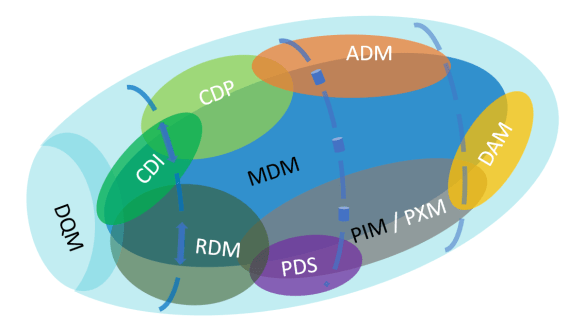
It is high season for painting Easter eggs now.MDM PIM DQM Easter EggThis egg is featuring:

  • Master Data Management (MDM),
  • Product Information Management (PIM) and/or
  • Data Quality Management (DQM)

as well as:

  • Application Data Management (ADM),
  • Customer Data Integration (CDI),
  • Customer Data Platform (CDP),
  • Digital Asset Management (DAM),
  • Product Data Syndication (PDS),
  • Product experience Management (PXM) and
  • Reference Data Management (RDM)

Check out the 10 data management TLAs on this list here.

The Resource List is Growing

Last week The Resource List went live on this site.

The rationale behind the scaling up of this site is explained in the article Preaching Beyond the Choir in the MDM / PIM / DQM Space.

These months are in general a yearly peak for conferences, written content and webinars from solution and service providers in the Master Data Management (MDM), Product Information Management (PIM) and Data Quality Management (DQM) space. With the covid-19 crises conferences are postponed and therefore the content providers are now ramping up the online channel.

As one who would like to read, listen to and/or watch relevant content, it is hard to follow the stream of content being pushed from the individual providers every day.

The Resource List on this site is a compilation of white papers, ebooks, reports, podcasts, webinars and other content from potentially all the registered tool vendors and service providers on The Solution List and coming service list. The Resource List is divided into sections of topics. Here you can get a quick overview of the content available within the themes that matters to you right now.

The list of content and topics is growing.

Check out The Resource List here.

Resources day 3

PS: The next feature on the site is planned to be The Case Story List. Stay tuned.

Scaling Up the List

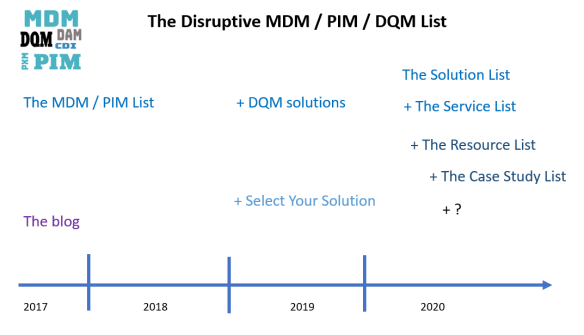
This site was launched in the late 2017.

Here the first innovative Master Data Management (MDM) and Product Information Management (PIM) tool vendors joined the list with a presentation page showcasing the unique capabilities offered to the market.

The blog was launched at the same time. Since then, a lot of blog posts – including guest blog posts – have been posted. The topics covered have been about the list, the analysts and their market reports as well as the capabilities that are essential in solutions and their implementation.

In 2019 the MDM and PIM tool vendors were joined by some of the forward-looking best-of-breed Data Quality Management (DQM) tool vendors.

The Select Your Solution service was launched at the same time. Here organizations – and their consultants – who are on the look for a MDM / PIM / DQM solution can jumpstart the selection process by getting a list of the best solutions based on their individual context, scope and requirements. More than 100 hundred end user organizations or their consultants have received such a list.

MDMlist timeline

Going into the 20es the site is ready to be scaled up. The new sections being launched are:

  • The Service List: In parallel with the solution providers it is possible for service providers – like implementation partners – to register on The Service List. This list will run besides The Solution List. For an organization on the look for an MDM / PIM / DQM solution it is equally important to select the right solution and the right implementation partner.
  • The Resource List: This is a list – going live soon – with white papers, webinars and other content from potentially all the registered tool vendors and service providers divided into sections of topics. Here end user organizations can get a quick overview of the content available within the themes that matters right now.
  • The Case Study List: The next planned list is a list of case studies from potentially all the registered tool vendors and service providers. The list will be divided into industry sectors. Here end user organizations can get a quick overview of studies from similar organizations.

If you have questions and/or suggestions for valuable online content, make a comment or get in contact here:

Go back

Your message has been sent

Warning
Warning
Warning
Warning

Warning.

What’s in a Product Name?

Within Master Data Management (MDM), Product Information Management (PIM) and Data Quality Management (DQM) one of the critical data elements that needs to be governed is the product name (product description).

Usually the product name is held in two forms:

  • A short form as it appears internally in an organization and is held in an ERP application. Everyone working with SAP knows about the challenge of keeping the product description in SAP within 40 characters. The short form is typically governed within the MDM discipline and is kept in the single one official language in the organization.
  • A long and customer friendly form as it is used when presenting the product in sales channels as for example on a web shop. The long form is typically governed within the PIM discipline and is kept in all languages in use in the organization.

The data quality dimensions that applies to the product name are namely:

  • Uniqueness, meaning that:
    • The product name must be the same (in short or long language form) across data stores in order to avoid duplicates.
    • Each product most have a distinct name, so you are able to distinguish one from the other.
  • Consistency, meaning that you must build the product name by sub elements that are sequenced the same way and have a common vocabulary.

The most common sub elements in a product name are:

  • Brand name or product line
  • Model number
  • Kind of product
  • Size
  • Color
  • Product classification (group) specific characteristics
  • Country

What is in a product name

It is a challenge to implement data governance around product names within a single organization. Even more it is a challenge to rely on / be depended on your trading partners when governing product names in business ecosystems as told in the post Toilet Seats and Data Quality.

Fashion vs Work Clothes: A PIM Perspective

In data management disciplines as Master Data Management (MDM), Product Information Management (PIM and Data Quality Management (DQM) the context has a lot say for data that fundamentally are the same. One example is fashion vs work clothes as it applies to PIM and data quality measures required .

Clothes for private (and white collar) use and work clothes are as products quite similar. You have the same product groups as shoes, trousers, belts, shirts, jackets, hats and so on.

However, the sales channels have different structures and the product information needed in sales, not at least self-service sales as in ecommerce, are as Venus and Mars.

Online fashion sales are driven by nice images – nice clothes on nice models. The information communicated is often fluffy with only sparse hard facts on data like fabrics, composition, certificates, origin. Many sales channel nodes only deal with fashion.

Selling work clothes, including doing it on the emerging online channels, does include images. But they should be strict to presenting the product as is. There is a huge demand for complete and stringent product information as we know it in B2B (online) sales.

Work clothes are often sold in conjunction with very different products as building materials, where the requirements for product information attributes are not the same. Work clothes comes, as fashion, in variants in sizes and colors. This is not so often used, or used quite differently, when selling for example building materials.

One challenging area here is where we have work clothes and building materials in the same data pool or in other means of Product Data Syndication (PDS).

Work Clothes versus Fashion