
The Master Data Management (MDM) market has traditionally been divided into Customer MDM and Product MDM – with Vendor/Supplier MDM as a rarer third option.
However, from being an academic notion we see more and more implementations where the MDM solution is build as a Party MDM solution, where the party entity encompass customer, vendor/supplier, other business partners, internal business units and any other party entity that matters to the sell, buy and make side of the enterprise.
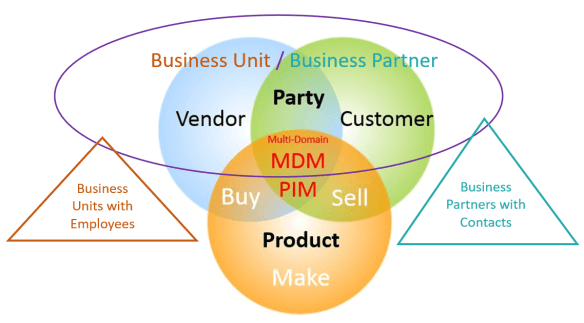
The party MDM concept will also encompass the employees (and contractors) in the business units – which can be seen as Human Resource MDM – as well as the contacts at B2B customers, vendors/suppliers and other business partners.
There are many drivers for building this model.
One example is that many enterprises, especially large corporations, has an intersection of customers and vendors/suppliers. This case was examined in the post How Bosch is Aiming for Unified Partner Master Data Management.
Then there is the good old question: “What is a customer?”. In many business scenarios there are more than direct customers that matters in marketing and selling. In manufacturing, including life science, there are B2B2C chains. In these and other industries there are influencers that matters. In life science that is healthcare professionals. In building materials that is for example architects and other construction professionals.
In banking the term counterparty is used to cover both direct customers and other parties that are referred to in the service delivery. In education there are teachers and students. In public administration there are citizens.
Practically all organizations have more parties than customers and vendors/suppliers involved in the operating model and therefore their descriptions must sooner or later be handled as master data in a unified Party MDM model. This will underpin the digital transformation that is on the agenda in every organization these days.
![Business Case ROI TCO MDM PIM DQM [2]](https://mdmlist.com/wp-content/uploads/2020/05/business-case-roi-tco-mdm-pim-dqm-2.png?w=300&h=300) The solution selection (utilizing the
The solution selection (utilizing the 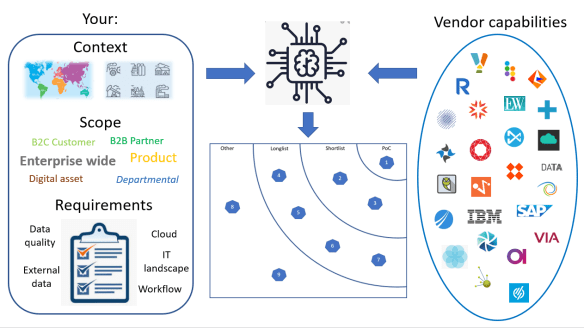
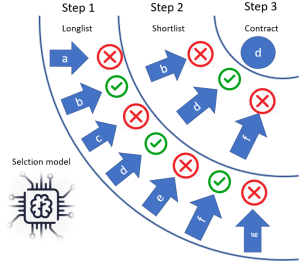 Your organization, possibly assisted by a consultancy firm, makes a deeper evaluation of the longlist with the 7 best solutions typically by issuing a written Request for Proposal (RFP) to all or the most promising solutions in the selection. The response will give you a detailed understanding of the capabilities offered and a price indication including license price and model, required consultancy costs and internal resources needed.
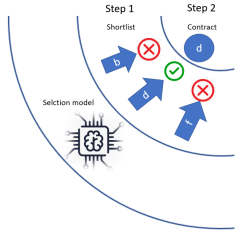 Your organization, possibly assisted by a consultancy firm, can issue a Request for Proposal (RFP) to the providers of the shortlisted solutions. Based on the response, including indications for total cost of ownership (TCO), you will invite perhaps two providers for a thorough demo and engage in answering specific concerns. From there your organization can award the best fit solution provider with a contract and you can commence the implementation possibly assisted by an implementation partner.
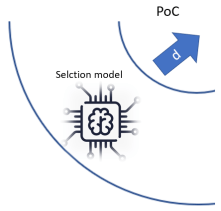 Your organization will invite the best fit solution provider for a Proof of Concept (PoC) possibly with the assistance of a consultancy firm. If the result is successful and the total cost of ownership (TCO) match your business case, you can commence the implementation based on a contract with the solution provider and possibly also with an implementation partner.
 The Disruptive MDM / PIM / DQM List